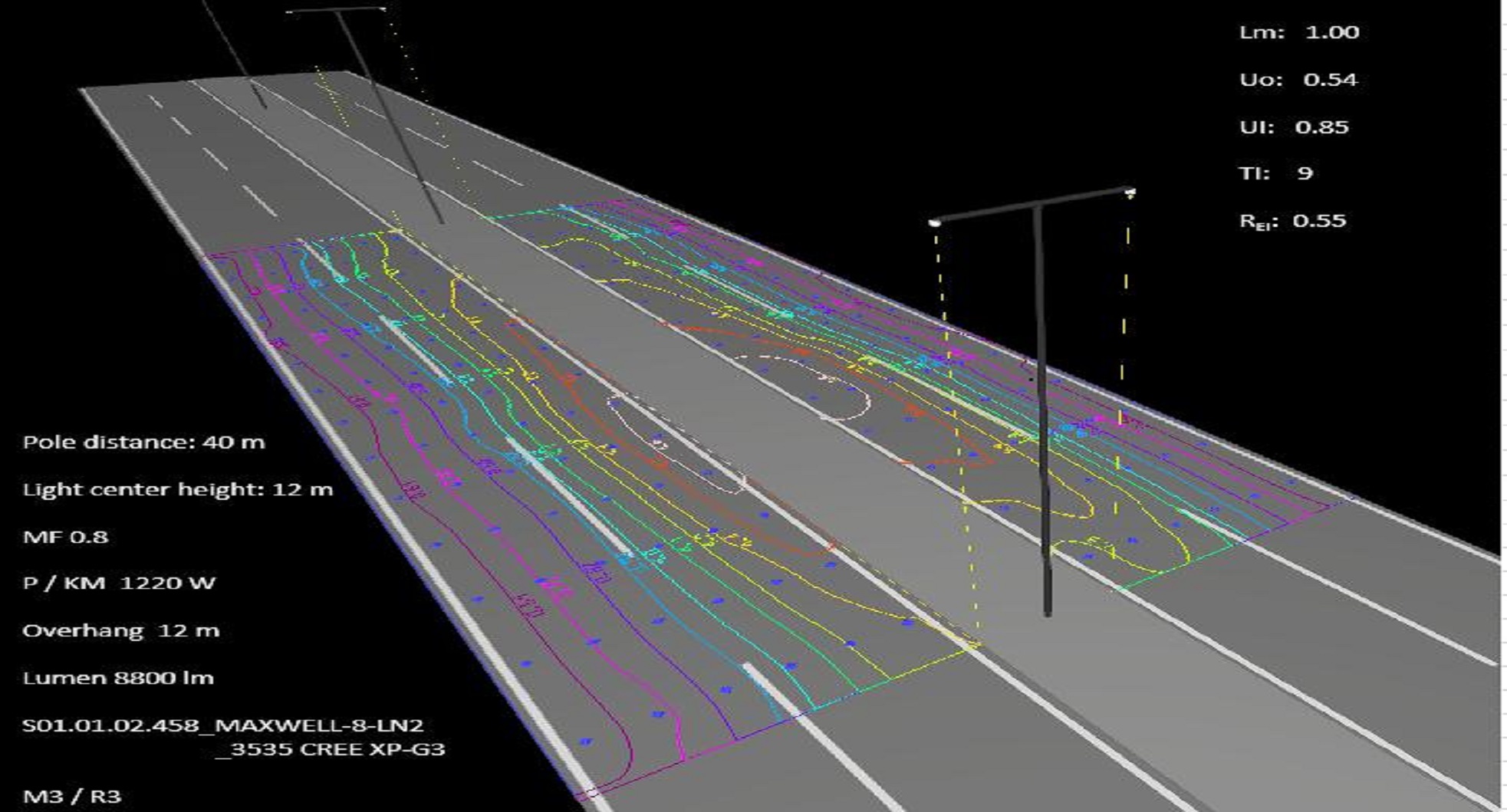
Comprehensive Guide to Street Lighting Requirements
Road lighting requires precise light distribution to ensure:
• Uniform illuminance on road surfaces
• Reduced glare for drivers and pedestrians
• High optical efficiency with minimal wasted light
• Compliance with regional lighting standards
Secondary optics play a critical role in shaping asymmetric beam patterns to direct light exactly where it is needed.
SunLumin provides more than 40 optics for each streeyt Application scenarios.
Road Classification & Lighting Levels and parameters:
Expressways/Highways: Main Roads:
Secondary Roads: Residential/Branch Roads:
Special Applications: Intersections; Pedestrian Zones:
Luminance (Lₐᵥ): Illuminance (Eₕₐᵥ):
Uniformity: Total Luminance Uniformity (U₀); Longitudinal Uniformity (Uₗ);
Glare Control: Threshold Increment (TI); Maximum Light Intensity (Iₘₐₓ);
Lighting Power Density (LPD); Luminous Efficacy;
Luminaire Placement:
Mounting Height: 12–15 m for expressways, 8–12 m for residential roads .
Spacing: 30–50 m for main roads, adjusted for road width and curvature .
Optical Design Considerations
When selecting road lighting lenses, engineers should consider:
• Beam shape consistency across production batches
• Cut-off control to limit glare
• Compatibility with LED packages
• Material stability under UV exposure and temperature cycling
Our road lighting optics are designed using secondary optical simulation and validated through real application testing.

We are a high-tech company with rapid development. It is our sacred mission to meet the needs of